Bilingual Websites in Rwanda: English & Kinyarwanda
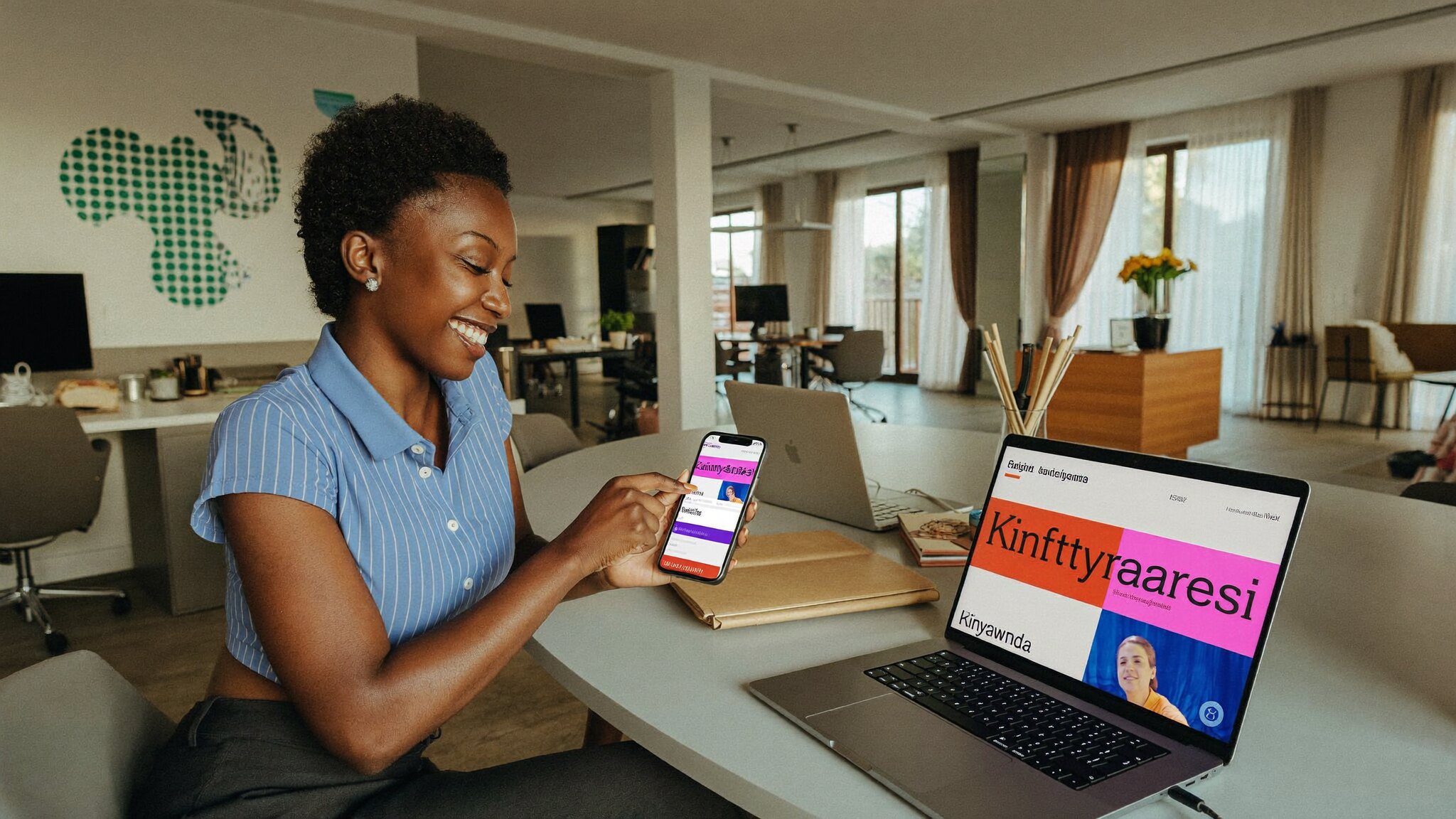
People trust — and buy — in the language they think in. A bilingual site meets every Rwandan customer where they are.
Two customers land on your website. One is a young professional comfortable reading business English; the other is a shop owner or a parent who thinks, jokes, and makes decisions in Kinyarwanda. If your site only speaks one of those languages, you've quietly closed the door on the other — not because they weren't interested, but because the words didn't feel like they were written for them. In a country where almost everyone shares Kinyarwanda and English runs business and government, the smartest websites don't choose. They speak both. Murakaza neza — welcome — works far better than a polite English "welcome" that some of your visitors only half-read.
Rwanda is a bilingual market — your site should be too
Rwanda's language reality is unique and worth designing for. Kinyarwanda is the mother tongue almost every Rwandan shares — it's the language of home, trust, and everyday life. English is the language of business, school, and government, and the one many people expect on a "serious," modern company. Both are official languages, and most of your customers move between them naturally throughout the day. A website that ignores one of them feels, to that audience, like a business that wasn't really built for them.
This isn't only about being understood — it's about belonging. Reading your offer in your own language sends a quiet but powerful signal: this business is one of us, and it sees me. That feeling is the start of trust, and trust is what turns a curious visitor into a paying customer.
One site, two languages, more customers
Which language goes where?
Bilingual doesn't always mean translating every word twice. The smart approach is matching the language to the moment — leading with the one that carries the most feeling or clarity for each kind of content:
| Content | Lead with | Why |
|---|---|---|
| Welcome & emotional headlines | Kinyarwanda | Warmth and belonging land hardest in the mother tongue |
| Product specs & technical detail | English | Often clearer and expected for business terms |
| Calls to action (Buy, Call, Order) | Both | Never let language be the reason someone hesitates |
| Trust & testimonials | Kinyarwanda | A neighbour's words feel real in the neighbour's language |
| Formal / official information | English | Matches how government and corporate Rwanda communicates |
How to build a bilingual site the right way
Done badly, a "two-language" site is worse than a one-language one. Done well, it feels effortless. Here's what separates the two:
- Add a clear language switch. A simple, visible EN / RW toggle in the menu lets every visitor choose in one tap — no hunting, no guessing.
- Use a real Kinyarwanda speaker, not raw machine translation. Kinyarwanda is rich and nuanced; automatic tools stumble badly and can make your brand look careless. Human-written copy reads warm and correct.
- Keep both versions in sync. When a price, product, or phone number changes, update both languages. A site that's current in English but stale in Kinyarwanda breaks trust with exactly the audience you wanted to win.
- Design for longer text. Kinyarwanda phrasing is often longer than English — buttons and headings need room to breathe so nothing breaks the layout. This is a core part of good UI/UX design for your Rwanda website.
- Set it up for search. Each language version should be a real page Google can read and index — so you also start showing up for the Kinyarwanda searches your competitors ignore.
Please don't ship Google-Translate Kinyarwanda. Auto-translation of Kinyarwanda is still rough, and a clumsy translation does more damage than English alone — it signals you didn't care enough to get your own language right. Always have a fluent speaker write or review it. Ururimi ni urw'agaciro — language carries dignity; treat it that way.
What about French and Swahili?
Rwanda actually recognises four official languages — Kinyarwanda, English, French, and Swahili — so "bilingual" is really a starting point, not a ceiling. For most small businesses, Kinyarwanda plus English reaches the overwhelming majority of customers and is the practical place to begin. But it pays to know your audience: if you serve older or more francophone clients, a French version can be a warm, respectful touch, and if you trade across the border into the wider East African Community, a little Swahili can open real doors. The good news is that a site built properly for two languages is already built to grow into a third or fourth — the structure is the hard part, and you only do it once.
Bilingual is also a marketing edge
Beyond courtesy, two languages widen your reach. Most Rwandan business sites default to English only — which means the customers searching and browsing in Kinyarwanda are underserved and up for grabs. A thoughtfully bilingual site can capture that overlooked audience, rank for searches others miss, and feel unmistakably local in a way an imported template never will. It's the same instinct behind the best modern African brands; we cover more of it in web design trends dominating African businesses in 2025.
The bottom line: in Rwanda you don't have to choose between English and Kinyarwanda — and the businesses that win online refuse to. Lead with warmth in Kinyarwanda, clarity in English, make switching effortless, and never let a machine mangle your mother tongue. A bilingual site reaches more people, earns deeper trust, and feels genuinely Rwandan. If you're still weighing whether to go online at all, start with why your Kigali business is losing customers without a website. Vuga ururimi rw'umukiriya, abakiriya bakwiyongere — speak your customer's language, and your customers grow.
Let's build a site that speaks Rwanda
Frame Africana designs bold, fast, bilingual websites — Kinyarwanda warmth and English clarity, with a clean language switch and copy written by people who actually speak both. Tell us about your business on WhatsApp and we'll show you what a truly local site could do. We reply within hours.
Chat with Frame Africana on WhatsApp →